
Nigerian Football
NEW ROLE FOR EMMANUEL AMUNEKE AT MISR EL-MAKKASA

Former Misr El-Makkasa head
coach Emmanuel Amuneke revealed his new role at the club after being
replaced by Ehab Galal.
Following a disappointing start to their season under Ahmed
Hossam ‘Mido’, El-Makkasa appointed former Tanzania national team manager
Emmanuel Amuneke in hopes that
he can save the club’s season.
However just one month into his new position, El-Makkasa
announced that Egyptian manager Ehab Galal will replace Amuneke.
The club then released a new statement revealing that the former Nigeria international won’t be leaving as he became the director of the club’s academies across Africa.
Talking to BBC Sport, Amuneke revealed many details regarding the academies project and explained his new role.
“I’m still with the team, there is no sack involved as reported because Makkasa is a massive group and the past year has seen them trying to create projects across the continent,” said Amuneke.
“When I was still working in Tanzania, they came to the country to discuss with the government about investing in the east African country. They plan to invest in Tanzania, Mali and possibly in Nigeria in the future.
“We’ve been discussing about the academies, we are
still looking at the contractual options because this is a long-term project
and I wouldn’t want it to affect any other coaching opportunities.
“The decision to bring in a new coach is only logical because accepting to work
on this big project means it will be difficult for me to combine both roles.
“We’ll see how things pan out but I am still here working with Makkasa,” he concluded.
El-Makkasa currently 16th on the league table with 14 points from 17 games, just three away from bottom-placed FC Masr. They were also knocked out of the Egypt Cup in the round of 16 by El-Gaish.
Ehab Galal’s first test will be on March 12th when El-Makkasa host 13th place Aswan in their first game in the Egyptian Premier League’s second round.

Nigerian Football
Ever-Present Falconets Qualify for 2026 FIFA U20 Women’s World Cup Despite Malawi Scare
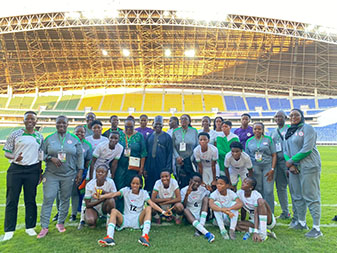
Nigeria’s U20 girls, the Falconets, once again underlined their status as Africa’s most consistent side at youth level after sealing qualification for the 2026 FIFA U20 Women’s World Cup in Poland despite a nervy 2-1 defeat to Malawi’s Young Scorchers in Lilongwe on Saturday.
The seven-time African champions progressed 3-2 on aggregate, relying on the crucial 2-0 first-leg victory secured in Ikenne a week earlier through an own goal by Malawi defender Maureen Kenneth and a fine strike from Kindness Ifeanyi.
The qualification means Nigeria have maintained their remarkable record of appearing at every edition of the FIFA U20 Women’s World Cup since the competition was introduced.
Backed by a passionate home crowd in Lilongwe, the Young Scorchers came out aggressively and quickly put the Falconets under pressure. Their persistence paid off early in the first half when a defensive mix-up in the Nigerian backline allowed a Malawian attacker to head home the opener and spark hopes of an unlikely comeback.
Nigeria almost responded immediately through the lively Kindness Ifeanyi, whose dangerous delivery from the right flank found Favour Nkwocha inside the area. However, Nkwocha’s powerful effort crashed against the woodwork as the hosts carried a 1-0 lead into halftime.
The tension intensified 10 minutes after the restart when another lapse in Nigeria’s defence gifted Malawi a second goal, drawing the tie level at 2-2 on aggregate and placing the Falconets’ proud qualification streak in serious danger.
With the momentum shifting towards the hosts, Falconets coach Moses Aduku turned to his bench for inspiration, and substitute Precious Oscar delivered at the decisive moment.
Oscar capitalised on hesitation in the Malawian defence in the 62nd minute, dispossessing an opponent before calmly slotting past the goalkeeper to hand Nigeria a priceless away goal and restore their aggregate advantage.
The strike silenced the home crowd and ultimately proved decisive as the Falconets showed composure and resilience in the closing stages to protect their lead and confirm another appearance on the global stage.
Although the defeat marked a rare away setback for Aduku’s side after impressive victories in Rwanda and Senegal earlier in the qualifying campaign, the Falconets achieved their primary mission of securing qualification for the world finals.
The 2026 FIFA U20 Women’s World Cup will be held in Poland from September 5 to 26.
Following the match, the Nigerian delegation expressed appreciation to Nigeria’s High Commissioner to Malawi, Ambassador Ibrahim Miringa, and the staff of the Nigerian mission in Malawi for their hospitality and support throughout the team’s stay in the southern African nation.
Join the Sports Village Square channel on WhatsApp: https://whatsapp.com/channel/0029Vaz7mEIGk1FxU8YIXb0H
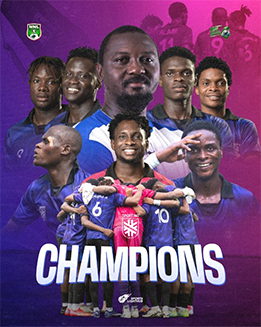
Sporting Lagos have emerged champions of the 2026 Nigeria National League (NNL) after edging city rivals Inter Lagos on goal difference at the end of the season-ending Super Four tournament in Ikenne, Ogun State.
The competition concluded on Friday at the Remo Stars Stadium with a dramatic Lagos derby that saw Inter Lagos defeat Sporting Lagos 1-0 on the final day.
Despite the loss, the “Tech Boys” still claimed the NNL title and the accompanying ₦10 million prize money after finishing top of the standings on superior goal difference.
Sporting Lagos entered the decisive Matchday Three needing only a draw to secure the crown, but their commanding earlier performances proved decisive. They had opened the Super Four campaign with a 1-0 victory over Ranchers Bees before producing the tournament’s most emphatic result with a 4-0 demolition of Doma United.
Inter Lagos also finished the competition on six points after recovering from an opening 1-0 defeat to Doma United. They responded with a 1-0 win over Ranchers Bees before securing the derby triumph against Sporting Lagos.
Ranchers Bees and Doma United finished third and fourth respectively, completing the quartet of clubs that have secured promotion to the 2026/27 Nigeria Premier Football League season.
For Sporting Lagos, the Super Four triumph represents a strong statement ahead of their return to top-flight football, while Inter Lagos will also head into the elite division with confidence after an impressive finish to the tournament.
The final day of the competition provided an entertaining atmosphere at the Remo Stars Stadium, with the well-organised event offering a glimpse of what fans can expect from the newly promoted clubs in the coming NPFL campaign.
Join the Sports Village Square channel on WhatsApp: https://whatsapp.com/channel/0029Vaz7mEIGk1FxU8YIXb0H
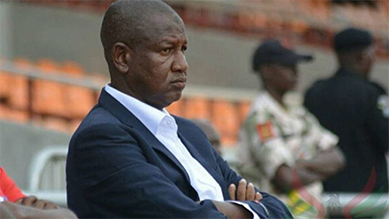
The Nigeria Football Federation has approved the appointments of Abdu Maikaba and Eboboritse Uwejamomere as head coaches of the country’s U20 and U17 boys’ national teams, respectively.
The appointments were endorsed by the NFF Executive Committee following recommendations from the Federation’s Technical and Development Committee.
Maikaba takes charge of the Flying Eagles after years of experience managing top clubs in the Nigeria Professional Football League.
The experienced tactician previously handled the Golden Eaglets and also served as assistant coach of the Flying Eagles during the tenure of Paul Aigbogun.
He has coached several prominent clubs, including Enyimba FC, Wikki Tourists FC, Kano Pillars FC and Plateau United FC. Maikaba is also remembered for leading Akwa United FC to victory in the 2017 Federation Cup, Nigeria’s oldest domestic football competition, now known as the President’s Federation Cup.
Uwejamomere, meanwhile, assumes responsibility for the Golden Eaglets. He has worked for many years as a coach-analyst with the Super Eagles and also served in a similar role with the Super Falcons.

Eboboritse Uwejamomere as the Video Analyst for the Super Falcons during the Paris 2024 Olympic Games.
Currently head of academy at Sporting Lagos FC, Uwejamomere has also gained valuable youth development experience in England with Millwall FC, Gillingham FC and Nottingham Forest FC. He also previously handled Abeokuta-based Stormers FC as head coach.
Join the Sports Village Square channel on WhatsApp: https://whatsapp.com/channel/0029Vaz7mEIGk1FxU8YIXb0H


Sports Journalism in Nigeria: Between Professionalism and Survival

Nigeria’s Falconets Await Opponents in Friday’s FIFA U-20 Women’s World Cup Draw

Ghana Join Nigeria in Sealing Places at FIFA U-20 Women’s World Cup in Poland
Breaking! Uzoho suspended from Super Eagles’ next match with Sierra Leone
No longer Super League as CAF changes name of its new clubs competition
NIGERIAN FOOTBALL CHIEF EXECUTIVE, SANUSI CHARGES NIGERIAN COACHES TO BE UPRIGHT, DILIGENT
-

 Boxing1 week ago
Usyk backs Joshua to beat Fury ahead of heavyweight showdown
-

 World Cup2 days ago
FIFA Plans Three Opening Ceremonies in All Host Nations for 2026 World Cup
-

 World Cup2 days ago
Burna Boy Joins Shakira for Official 2026 World Cup Song ‘Dai Dai’
-

 World Cup1 day ago
Mexico president wavers on plan to cut school year by 40 days for the World Cup
-

 World Cup1 week ago
‘They are not representing Iran’: protesters urge FIFA to ban Iran from World Cup
-

 World Cup5 days ago
Despite 2026 Absence, Nigeria Still Leads Africa’s World Cup Winners’ Chart
-

 World Cup4 days ago
Canada seeks to raise soccer profile and league growth with 2026 World Cup
-

 World Cup1 week ago
33 Years On: Jay-Jay Okocha and the Timeless Magic of a Nigerian Icon