International Football
MOSES, JUNIOR AJAYI CROSS FIRST HURDLE IN CAF AWARD

BY BOLAJI OKUNOLA.
As the race for the picking of the African Player of the Year and Player of the Year (Based in Africa) gathers momentum, two of the three Nigerians initially shortlisted for the two categories have made it to the next round.
Victor Moses for the African Player of the Year and Junior Ajayi for the based in Africa categories have made the cut as the original lists of 30 players in each category have been pruned to 10 and 11 respectively. Unfortunately, Super Eagles’ William Troost-Ekong who was in the original 30-man list did not make it to the next stage.
According to a press release by CAF on Monday, the reduction of the number of nominees was done after votes from members of the CAF Technical & Development Committee, CAF Media Experts Panel and Independent Media and TV Consultants were counted.
Next is to further reduce the nominees to single digits ahead of the January 4 CAF/Aiteo Award in Accra on January 4, 2018.
The second and final phase will involve Head Coaches or Technical Directors of the National Associations taking part in the voting exercise and ten members from the Independent Media and TV Consultants group.
According to CAF, for the first time, captains of the senior men’s national teams of the affiliated National Associations will also take part in decision making process of the African Player of the Year and Player of the Year (Based in Africa).
African Player of the Year (alphabetical order)
- Bertrand Traore (Burkina Faso & Olympique Lyon)
- Denis Onyango (Uganda & Mamelodi Sundowns)
- Karim El Ahmadi (Morocco & Feyenoord)
- Keita Balde (Senegal & Monaco)
- Mohamed Salah (Egypt & Liverpool)
- Naby Keita (Guinea & RB Leipzig)
- Pierre-Emerick Aubameyang (Gabon & B. Dortmund)
- Sadio Mane (Senegal & Liverpool)
- Victor Moses (Nigeria & Chelsea)
- Vincent Aboubakar (Cameroon & Porto)
- Yacine Brahimi (Algeria & Porto)
Player of the Year (Based in Africa)
- Achraf Bencharki (Morocco & Wydad Athletic Club)
- Ahmed Fathi (Egypt & Al Ahly)
- Ali Maaloul (Tunisia & Al Ahly)
- Aristide Bance (Burkina Faso & El Masry)
- Ben Malango (DR Congo & TP Mazembe)
- Denis Onyango (Uganda & Mamelodi Sundowns)
- Jeremy Brockie (New Zealand & Supersport)
- Junior Ajayi (Nigeria & Al Ahly)
- Mohamed Ounnajem (Morocco & Wydad Athletic Club)
- Taha Yassine Khenisssi (Tunisia & Esperance)

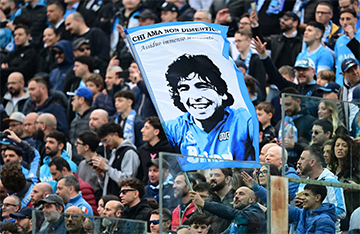
A new trial over the death of Argentine soccer legend Diego Maradona will begin on Tuesday, with seven members of his medical team charged with negligent homicide nearly a year after a previous case collapsed in a mistrial.
An enduring presence in Argentina – from towering murals to tattoos, opens new tab – Maradona died on November 25, 2020, at 60, after a heart attack while he was recuperating from brain surgery to remove a blood clot.
A court in San Isidro, near Buenos Aires, will hear testimony from just under 100 witnesses as it tries Maradona’s medical team over alleged negligence in the death of the 1986 World Cup champion.
His medical team has denied wrongdoing. The defendants are psychiatrist Agustina Cosachov, neurosurgeon Leopoldo Luque, psychologist Carlos Angel Diaz, physician Nancy Edith Forlini, nurse Ricardo Almiron, head nurse Mariano Ariel Perroni, and physician Pedro Pablo Di Spagna. An eighth defendant, nurse Dahiana Madrid, will be tried in a separate jury trial, with no date yet set.
Two months into the first trial, which started last March, a mistrial was declared when one of three judges, Julieta Makintach, resigned after video surfaced showing her being interviewed by a camera crew in the corridors of the courthouse and in her office as part of a documentary, in breach of judicial rules.
The retrial will require both prosecutors and defense lawyers to reassess their strategies after the first trial aired photographs, videos, audio recordings and forensic evidence. Many witnesses, including Maradona’s children and his former wife, Claudia Villafane, have already testified.
Prosecutors argued in the initial trial that medical professionals broke treatment protocols and that the home where Maradona was recovering from surgery amounted to a “theatre of horror,” where necessary care was not provided.
The defense countered that his death was inevitable given his longstanding health problems. Maradona struggled for decades with cocaine and alcohol addiction.
The negligence charges emerged in 2021 after prosecutors appointed a medical board to investigate Maradona’s death. The panel concluded his medical team acted in an “inappropriate, deficient and reckless” manner.
-Reuters
Join the Sports Village Square channel on WhatsApp: https://whatsapp.com/channel/0029Vaz7mEIGk1FxU8YIXb0H
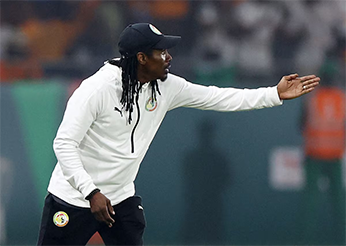
Aliou Cisse has been named coach of the Angola national team, the country’s football federation (FAF) announced on Thursday, 24 hours after the Senegalese left his post in Libya.
The 50-year-old coach, who led Senegal to their maiden Africa Cup of Nations title in 2022, ended his short stint with the Libyan national team on Wednesday, after taking charge in March 2025.
“Welcome, Aliou Cisse, head coach of the Angola national team,” the FAF said on Facebook. Angola, which failed to reach this year’s World Cup, will start their 2027 AFCON qualifying campaign in September.
-Reuters
Join the Sports Village Square channel on WhatsApp: https://whatsapp.com/channel/0029Vaz7mEIGk1FxU8YIXb0H
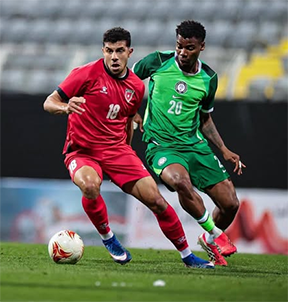
Nigeria’s Super Eagles were held to a 2-2 draw by FIFA World Cup-bound Jordan in an eventful international friendly in Antalya on Tuesday night, with the contest overshadowed by a late red card to Alex Iwobi.
Iwobi, making his 98th appearance for the national team, was sent off in the closing stages, capping a dramatic encounter in which Nigeria surrendered a first-half lead and finished the game with ten men.
The match, played at the Mardan Sports Complex, brought Nigeria’s March international window to a close, but it proved anything but routine as both sides delivered a fiercely contested and entertaining clash.
Jordan, ranked 64th in the world and enjoying strong recent form, struck first in the 17th minute through Mousa Tamari. A well-worked free-kick routine caught the Nigerian defence napping, allowing the forward to fire home the opener.
Nigeria responded quickly and thought they had equalised six minutes later when Raphael Onyedika finished from a Moses Simon cut-back, but the goal was controversially ruled out.
The Super Eagles eventually drew level in the 30th minute. Stand-in captain Moses Simon, earning his 97th cap, reacted fastest after Ademola Lookman’s effort was blocked, slotting home with a composed left-footed finish for his second goal in as many matches.
Nigeria went ahead four minutes before halftime when Bright Osayi-Samuel’s pinpoint cross found debutant Emmanuel Fernandez, who showed great composure to control and finish, giving the three-time African champions a 2-1 lead at the interval.
The second half took on a more physical tone, with goalkeeper Francis Uzoho forced off in the 57th minute after sustaining an injury while clearing the ball. Adebayo Adeleye replaced him between the posts.
Head coach Eric Chelle introduced Wilfred Ndidi and Alex Iwobi to shore up the midfield, but Jordan continued to press and were rewarded with an equaliser in the 77th minute.
Nigeria pushed for a winner late on, handing a senior debut to Philip Otele, while Samuel Chukwueze came on for Moses Simon. However, the closing moments were marred by Iwobi’s dismissal, leaving the Super Eagles to see out the match with ten men.
Despite the draw, the encounter offered valuable insights for the coaching crew as Nigeria continues preparations for the 2027 Africa Cup of Nations qualifiers.
Join the Sports Village Square channel on WhatsApp: https://whatsapp.com/channel/0029Vaz7mEIGk1FxU8YIXb0H


CAF President Mourns Former NFF Boss Ibrahim Galadima

Bottom side Wolves relegated from the Premier League

Akanbi, Asaju Emerge Champions at Alabi Memorial Table Tennis Tournament in Osun
Breaking! Uzoho suspended from Super Eagles’ next match with Sierra Leone
No longer Super League as CAF changes name of its new clubs competition
NIGERIAN FOOTBALL CHIEF EXECUTIVE, SANUSI CHARGES NIGERIAN COACHES TO BE UPRIGHT, DILIGENT
-

 UEFA Champions League1 week ago
Heineken Ramps Up Champions League Activations as Quarter-Final Drama Peaks
-

 Premier League1 week ago
Ghana player Partey pleads not guilty to additional rape charges in UK
-

 Nigerian Football1 week ago
Title Race Goes Down to the Wire as Relegation Battle Intensifies in NPFL
-

 Premier League1 week ago
Nigerian-Descent Okafor Hits Brace to Sink Manchester United at Old Trafford
-

 OBITUARY1 week ago
Ghana Police Detail How Berekum Chelsea Player Was Killed in Armed Robbery Attack
-

 World Cup6 days ago
FIFA Weighs Request to Trump Over ICE Raids During 2026 World Cup
-

 MEDIA7 days ago
Former SWAN Chief, Ndubuoke, Charges Nigerian Sportswriters to Uphold Ethics Amid Rising Corruption
-

 Boxing1 week ago
Fury Calls Out Joshua After Dominant Win Over Makhmudov