
International Football
World Cup Corruption Report out Today

Barring last minute changes, the previously unseen details from Michael Garcia’s 403-page report into allegations of corruption behind the bidding process for FIFA’s 2018 and 2022 World Cups will be published this Tuesday.
Sports Village Square has gathered from US-based Sporting News Media that the report written by former independent ethics investigator Michael Garcia on behalf of FIFA, courted controversy when a severely abridged version was released in 2014.
In protest, the author left the Sepp Blatter – led FIFA which had watered down the original 403 report into a 42 –page document which it called the “legally appropriate version”.
Based on the edited version, Qatar, the designated hosts for the 2022 FIFA World Cup, was cleared of corruption charges. That was despite claims by a German publication, Bild, which stated it had in its possession details of a $2 million that was paid to the 10-year old daughter of a FIFA official.
Bild , according to reports Sports Village Square gathered from America’s Sporting News Media, also suggests three FIFA executive members were flown to a party in Rio de Janeiro in a private jet belonging to the Qatar FA before the vote for who would host the 2018 and 2022 World Cup finals more than six years ago.
The Aspire Academy, an influential sports organisation in Qatar, has been accused of “being decisively involved in the manipulation of FIFA members with a right to vote” for the 2022 finals, according to Bild.
However, in November 2014 the head of FIFA’s ethics committee, Hans Joachim Eckert, said that his team “did not find any violations or breaches of the relevant rules and regulations” and cleared Qatar of corruption charges.
“The potentially problematic facts and circumstances identified by the report concerning the Qatar 2022 bid were, all in all, not suited to compromise the integrity of the 2018/22 bidding process as whole,” he added.
Should Bild‘s alleged full report — which it intends to reveal details of in numerous articles across Tuesday — make any substantial claims to the contrary, it could drag FIFA back into a corruption quagmire it’s been fighting to climb out of for several years.
Garcia cited “a lack of leadership” upon his resignation, but Gianni Infantino has since replaced Sepp Blatter as president of the football’s world governing body.
French and Swiss prosecutors are already investigating the bidding process and FIFA’s alleged participation in malpractice, with Blatter having been questioned as a witness in April of this year.
Both the US and the UK failed in the 2010 bidding process to secure World Cup finals, with the latter heavily criticised in the abridged Garcia report that FIFA published.

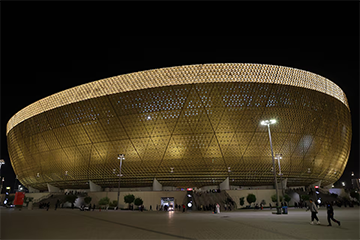
The ‘Finalissima’ match between Spain and Argentina that was scheduled to be held in Qatar has been cancelled due to the conflict in the Middle East, while the South American side rejected multiple alternatives, UEFA said on Sunday.
The U.S.-Israeli strikes on Iran have affected countries throughout the Gulf, disrupting travel in some of the world’s busiest transit hubs and forcing several sporting events to be cancelled due to safety concerns.
The contest between European champions Spain and Copa America winners Argentina was scheduled for March 27 at Doha’s Lusail Stadium, where fans would have had the opportunity to watch Lionel Messi go head-to-head with Lamine Yamal.
UEFA said they held discussions with the organising authorities in Qatar and concluded that the match could not take place due to the “current political situation” in the region.
“It is a source of great disappointment to UEFA and the organisers that circumstances and timing have denied the teams of the chance to compete for this prestigious prize in Qatar,” UEFA said in a statement.
Qatar’s Local Organising Committee said airspace disruption and travel restrictions led to the cancellation of its Qatar Football Festival, where the host country, Egypt, Saudi Arabia and Serbia were also set to play friendly games this month.
The Football Association of Serbia later announced they would play away in Spain on March 27 and host Saudi Arabia four days later.
OTHER ALTERNATIVES REJECTED BY ARGENTINA
The Finalissima’s cancellation was not just about Qatar’s security concerns, however, with UEFA saying they explored other feasible alternatives, but they proved to be ‘unacceptable’ to the Argentinian Football Association (AFA).
UEFA first offered to stage the match at the Santiago Bernabeu in Madrid with a 50:50 split of supporters in the stadium.
A second option was to stage the Finalissima over two legs — at the Bernabeu on March 27 and the second leg in Buenos Aires during an international window before the next Euros and Copa America in 2028.
However, the AFA rejected both options. UEFA said Argentina made a counter offer to play the game after the World Cup but Spain had no available dates.
“Ultimately, UEFA sought a commitment from Argentina that, if a neutral venue in Europe could be found, the game could go ahead on 27 March… or on the alternative date of 30 March. This proposal was also rejected,” UEFA added.
SPAIN WERE READY TO PLAY
The Spanish football federation (RFEF) said they had offered Argentina “all possible options” in collaboration with UEFA to ensure the match went ahead, adding that they had the organisational capacity to stage the clash on short notice.
“From the very outset, the Federation has expressed its absolute commitment to ensuring this match goes ahead, as it believes it brings prestige and international reputation at a crucial time in a World Cup year,” the RFEF said.
“Furthermore, it has worked tirelessly to achieve this. Spain was prepared to play, as has always been stated.”
The 2026 World Cup in the United States, Mexico and Canada kicks off on June 11.
The 2022 edition of the Finalissima was held at Wembley Stadium in London where Argentina beat Italy 3-0.
-Reuters
Join the Sports Village Square channel on WhatsApp: https://whatsapp.com/channel/0029Vaz7mEIGk1FxU8YIXb0H
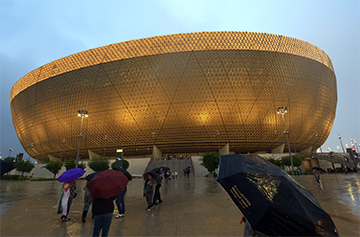
Soccer chiefs from Europe and South America will hold a final meeting before a Thursday deadline to decide whether and where this month’s “Finalissima” between Spain and Argentina will be played, with London emerging as the leading candidate after doubts over Doha, multiple sources told Reuters on Tuesday.
The match between European champions Spain and Copa America holders Argentina had been scheduled for March 27 at Lusail Stadium in Doha.
However, it has become increasingly unlikely that Qatar will host the fixture after the Qatar Football Association suspended soccer tournaments indefinitely following U.S. and Israeli attacks on Iran and retaliatory missiles fired at the Arabian Peninsula.
The Spanish FA (RFEF) has been pushing for a swift resolution, mindful that the March international break is viewed as vital preparation ahead of the June-July World Cup in North America.
“I know that negotiations are underway,” Spain coach Luis de la Fuente told Spanish Public Radio (RNE) on Monday. “The first thing, as a society, is to stop the conflict, but once you are immersed in it and you don’t know how long it will last, the solution would be, as long as you can’t play there, to find another venue as soon as possible.
Wembley Stadium staged the previous edition in 2022, when Argentina beat Italy, but it is set to host England v Uruguay on March 27. London, however, has other stadiums capable of staging the showpiece, leaving the English capital as the most likely alternative should Doha be ruled out, sources confirmed.
ALTERNATIVE OPPONENTS CONSIDERED
While keen to face Argentina and high-profile players such as Lionel Messi, sources told Reuters that Spain had made clear their priority was not to waste the last window of international fixtures before the World Cup and they were already contemplating alternative opponents.
With Spain also due to face Egypt three days later, any change would require agreement between the RFEF and European soccer body UEFA, South American confederation CONMEBOL, global governing body FIFA and the Argentine FA (AFA).
The RFEF, AFA and UEFA did not immediately respond to Reuters requests for comment.
A spokesperson for South American confederation CONMEBOL told Reuters that several meetings between the parties had taken place in recent days but did not confirm Thursday’s deadline or London as the preferred venue.
Madrid was initially proposed by the RFEF but rejected by the AFA, who preferred a neutral venue rather than giving Spain home advantage.
Morocco offered to stage the game, but the RFEF was unwilling to back their Mediterranean neighbours amid tensions behind the scenes over the 2030 World Cup, which Spain, Morocco and Portugal will co-host. Both Spain and Morocco are campaigning to stage the final.
Miami was also considered, with Messi based there at Inter Miami, but Hard Rock Stadium is hosting the Miami Open tennis tournament at the same time.
-Reuters
Join the Sports Village Square channel on WhatsApp: https://whatsapp.com/channel/0029Vaz7mEIGk1FxU8YIXb0H
International Football
Spain-Argentina ‘Finalissima’ in Qatar at risk amid US, Israel attacks on Iran
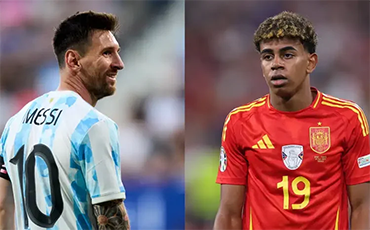
The match between Spain and Argentina, tagged “Finalissima” in Doha, is in doubt after the Qatar Football Association suspended soccer tournaments indefinitely following U.S. and Israeli attacks on Iran and retaliatory missiles fired at the Arabian Peninsula.
The contest between European Championship winners Spain and Copa America champions Argentina was scheduled for March 27 at Doha’s Lusail Stadium, with potential big-name draws including Lamine Yamal and Lionel Messi.
“Qatar Football Association announces the postponement of all tournaments, competitions and matches, effective from today and until further notice,” the association said in a statement on Sunday.
“The new dates for the resumption of competitions will be announced in due course through the Association’s official channels.”
The final call on whether to postpone the game rests with event organisers UEFA and CONMEBOL.
The Bahrain Football Association postponed all its matches until further notice, while the Asian Football Confederation on Sunday announced it was delaying Champions League Elite fixtures in the region.
The Asian Champions League Two, currently at the quarter-final stage, has also been impacted, along with games in the Challenge League.
Countries across the Middle East have been on high alert since Saturday, when the U.S. and Israel launched air strikes against Iran, aimed at diminishing Iran’s military capability.
Iran retaliated by attacking U.S. targets around the region, including in the UAE, Saudi Arabia and Qatar.
On Sunday, Qatar’s interior ministry reported a fire in an industrial zone after debris fell from an intercepted missile.
Join the Sports Village Square channel on WhatsApp: https://whatsapp.com/channel/0029Vaz7mEIGk1FxU8YIXb0H


FIFA Unlikely to Move Iran’s World Cup Matches from U.S.

NBB of C Rejects Alleged NBF Move to Regulate Professional Boxing in Nigeria

AFCON 2025 Final Controversy: Legal Reality Favours Morocco as Senegal Eyes CAS Appeal
Breaking! Uzoho suspended from Super Eagles’ next match with Sierra Leone
No longer Super League as CAF changes name of its new clubs competition
AIU releases its report on Tobi Amusan
-

 World Cup2 days ago
EXCLUSIVE! Late Filing, Unpaid Fee Doom Nigeria’s Protest Against DR Congo
-

 World Cup4 days ago
FIFA Disciplinary Hammer Falls on Nigeria and DR Congo
-

 World Cup7 days ago
Iran’s World Cup uncertainty: Could Nigeria benefit from a rare FIFA wildcard?
-

 OBITUARY6 days ago
BREAKING: Another Blow for Nigerian Sports as Henry Nwosu Dies at 62
-

 Nigerian Football1 week ago
Nigeria’s First Modern Stadium Turns 68, But Lies in Neglect
-

 World Cup1 week ago
Trump says it is not appropriate for Iran to be in soccer World Cup
-

 Uncategorized1 week ago
Morocco’s Prince Moulay Abdellah Stadium Tops Global Vote for Stadium of the Year 2025
-

 OBITUARY6 days ago
Nigeria Football Federation Mourns 1980 AFCON Hero Henry Nwosu