International Football
NFF Denies Live Streaming Hiccup

The Nigeria Football Federation has dissociated itself from the failure of a plan to have Thursday’s international friendly between the Super Eagles and Teranga Lions of Senegal in London streamed live to interested Nigerians.
NFF’s Director of Media and Communications, Ademola Olajire explained on Friday that the task of having the game put up on live stream, as well as other details like TV production and stadium readiness, was entirely that of the organizers – Eurodata Sport.
“The live streaming of the match had nothing to do with the NFF. Our clear responsibility was to present a team, by the name Super Eagles of Nigeria, while other tasks were squarely on the plate of the Match Agent.
“Our Official FIFA Match Agent, Jairo Pachon of Eurodata Sport had an agreement with some firm in Nigeria to live stream the match, through receiving signals from the production team at the stadium, but a technical hitch that arose late in the day conspired to make that impossible.
“Mr. Jairo Pachon himself has explained that the hitch was brought to his notice at about 8pm on Thursday, just as the match was kicking off. There was definitely no attempt by the NFF or its Match Agent to scam anyone.”
On Thursday, Jairo Pachon told thenff.com that efforts were at an advanced stage to upload the full match for people to watch for free.
“We have perfected the plan to upload onto a link and then make it public, where people can go and enjoy the full match. What happened was unfortunate but it was a technical issue that nobody could rectify at the time.
“We have the highest regard for fans of Nigerian football worldwide and will never take them for granted. The company concerned will refund in full the monies paid by people who wanted to watch the match on live stream.”
Both teams played out a 1-1 draw under seven degree Celsius weather at The Hive – home ground of League 2 clubs, Barnet FC and London Bees. 2017 Africa Cup of Nations quarter finalists Senegal went ahead in the 54th minute through Moussa Sow but Kelechi Iheanacho clawed the Eagles back from the penalty spot nine minutes from time.
The Super Eagles will take on the Etalons of Burkina Faso at the same venue and time on Monday, in their second friendly game.

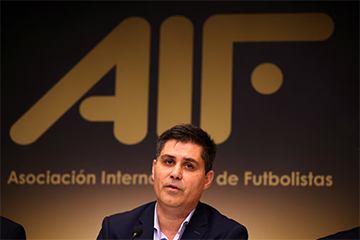
Representatives from four national players’ unions on Thursday launched a new global organisation in Madrid, which they say will strengthen footballers’ rights and improve dialogue with governing bodies.
Opening a new front in the battle over who speaks for players, the International Footballers’ Association (AIF) was unveiled, with David Aganzo, president of Spain’s Association of Footballers (AFE) and a former head of the global union FIFPRO, appointed to lead the organisation.
Players’ unions from Brazil, Mexico and Switzerland were also represented.
The initiative drew a swift rebuke from FIFPRO, which said in a statement that Aganzo was acting out of self-interest and aligning himself with organisations linked to football governing bodies, as well as groups expelled from FIFPRO over alleged mismanagement.
Aganzo rejected the criticism, saying he “will not seek confrontation with FIFPRO”.
The launch comes amid strained relations between players’ unions and football authorities, particularly over the expanding international match calendar.
Relations between FIFA and FIFPRO deteriorated in 2024 after the union lodged a complaint with the European Commission, arguing that the global governing body was abusing its dominant position by adding competitions without sufficient consultation.
Aganzo denied suggestions that the new initiative was backed by FIFA president Gianni Infantino, but said “direct dialogue with FIFA” was essential.
AFE’s Extraordinary General Assembly approved the initiative in February with 99.8% of votes cast in favour of spearheading the creation of the AIF.
The same assembly also backed AFE’s withdrawal from FIFPRO, citing what it described as a “complete lack of transparency, as well as its total lack of dialogue with international bodies.”
“We represent over 30,000 footballers, and we come here with a new model aimed at safeguarding players’ rights and facilitating direct communication with all international bodies,” Aganzo told reporters.
“We are in contact with 15 to 20 unions already who were very aware of this moment and waiting for this announcement to make their move and join our initiative.”
He declined to identify any unions beyond those present.
Asked about a report that a senior envoy to U.S. President Donald Trump had urged FIFA to replace Iran with Italy at the upcoming World Cup, Aganzo urged caution.
“These are more political issues; on April 30th, I’ll be speaking to Gianni (Infantino) at the FIFA Congress, and we will discuss those things,” Aganzo said.
“People who want to go to the World Cup have to earn their place on sporting merit.”
-Reuters
Join the Sports Village Square channel on WhatsApp: https://whatsapp.com/channel/0029Vaz7mEIGk1FxU8YIXb0H
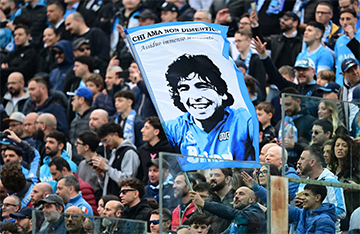
A new trial over the death of Argentine soccer legend Diego Maradona will begin on Tuesday, with seven members of his medical team charged with negligent homicide nearly a year after a previous case collapsed in a mistrial.
An enduring presence in Argentina – from towering murals to tattoos, opens new tab – Maradona died on November 25, 2020, at 60, after a heart attack while he was recuperating from brain surgery to remove a blood clot.
A court in San Isidro, near Buenos Aires, will hear testimony from just under 100 witnesses as it tries Maradona’s medical team over alleged negligence in the death of the 1986 World Cup champion.
His medical team has denied wrongdoing. The defendants are psychiatrist Agustina Cosachov, neurosurgeon Leopoldo Luque, psychologist Carlos Angel Diaz, physician Nancy Edith Forlini, nurse Ricardo Almiron, head nurse Mariano Ariel Perroni, and physician Pedro Pablo Di Spagna. An eighth defendant, nurse Dahiana Madrid, will be tried in a separate jury trial, with no date yet set.
Two months into the first trial, which started last March, a mistrial was declared when one of three judges, Julieta Makintach, resigned after video surfaced showing her being interviewed by a camera crew in the corridors of the courthouse and in her office as part of a documentary, in breach of judicial rules.
The retrial will require both prosecutors and defense lawyers to reassess their strategies after the first trial aired photographs, videos, audio recordings and forensic evidence. Many witnesses, including Maradona’s children and his former wife, Claudia Villafane, have already testified.
Prosecutors argued in the initial trial that medical professionals broke treatment protocols and that the home where Maradona was recovering from surgery amounted to a “theatre of horror,” where necessary care was not provided.
The defense countered that his death was inevitable given his longstanding health problems. Maradona struggled for decades with cocaine and alcohol addiction.
The negligence charges emerged in 2021 after prosecutors appointed a medical board to investigate Maradona’s death. The panel concluded his medical team acted in an “inappropriate, deficient and reckless” manner.
-Reuters
Join the Sports Village Square channel on WhatsApp: https://whatsapp.com/channel/0029Vaz7mEIGk1FxU8YIXb0H
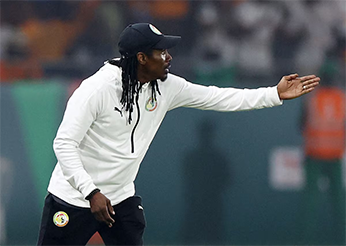
Aliou Cisse has been named coach of the Angola national team, the country’s football federation (FAF) announced on Thursday, 24 hours after the Senegalese left his post in Libya.
The 50-year-old coach, who led Senegal to their maiden Africa Cup of Nations title in 2022, ended his short stint with the Libyan national team on Wednesday, after taking charge in March 2025.
“Welcome, Aliou Cisse, head coach of the Angola national team,” the FAF said on Facebook. Angola, which failed to reach this year’s World Cup, will start their 2027 AFCON qualifying campaign in September.
-Reuters
Join the Sports Village Square channel on WhatsApp: https://whatsapp.com/channel/0029Vaz7mEIGk1FxU8YIXb0H


‘Mr Europa League’ Unai Emery into yet another final

NFF Appoints New Coaches for U20 and U17 Boys National Teams

Enakhena Ends Tenure with Call for Better-Structured NNL
Breaking! Uzoho suspended from Super Eagles’ next match with Sierra Leone
No longer Super League as CAF changes name of its new clubs competition
NIGERIAN FOOTBALL CHIEF EXECUTIVE, SANUSI CHARGES NIGERIAN COACHES TO BE UPRIGHT, DILIGENT
-

 Boxing5 days ago
Usyk backs Joshua to beat Fury ahead of heavyweight showdown
-

 Olympics1 week ago
Super Falcons Draw Bye, Set to Face South Sudan or Comoros in LA 2028 Olympic Qualifiers
-

 Governing Bodies1 week ago
CAF, UEFA Renew Alliance 29 Years After Meridian Cup Pact
-

 World Cup1 week ago
Iranian Football Delegation Turned Back at Toronto Airport, Miss FIFA Congress
-

 World Cup7 days ago
‘They are not representing Iran’: protesters urge FIFA to ban Iran from World Cup
-

 U-20 FOOTBALL1 week ago
Football Meets History as Ghana Set To Celebrate 70 Years of Independence with U-20 Afcon Hosting
-

 World Cup3 days ago
Despite 2026 Absence, Nigeria Still Leads Africa’s World Cup Winners’ Chart
-

 Governing Bodies1 week ago
Rabat Wins Global Spotlight as Morocco Lands FIFA’s 77th Elective Congress